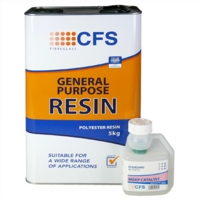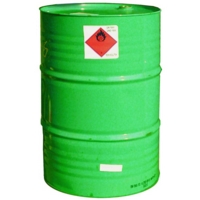

Polyester Resin1. IDENTIFICATION OF THE PREPARATION AND COMPANYProduct Name and / or Code: NORPOL, POLYLITE, BEETLEPolyester - Standard RangeNORPOL Filler RangeRefer to product label for more informationIntended use: Polyester resin for the GRP-industry.Refer to product Technical Information Bulletin for more informationSupplied by:Reichhold UK Ltd. 54 Willow Lane, Mitcham Surrey CR4 4NA, England.Telephone: 44 (0) 181-648-4684 Fax: 44 (0) 181-640 6432In case of an emergency: contact 44 (0) 1865 407333 2. COMPOSITION / INFORMATION ON INGREDIENTSSubstances presenting a health hazard within the meaning of the Dangerous Substances Directive 67/548/EEC.Names Conc. (%) Symbol R phrasesStyrene 25 - 50 Xn R-10,20,36/38 3. HAZARDS IDENTIFICATION OF THE PREPARATIONR-10: FlammableR-20: Harmful by inhalationR-36 / 38: Irritating to the eyes and skin 4. FIRST AID MEASURESGeneral:In all cases of doubt, or when symptoms persist, seek medical attention. Never give anything by mouth to an unconscious person.Inhalation:Remove to fresh air, keep patient warm and at rest, if breathing is irregular or stopped, administer artificial respiration. Give nothing by mouth. If unconscious place in recovery position and seek medical advice.Eye contact:Irrigate copiously with clean, fresh water for at least 10 minutes, holding the eyelids apart. Seek medical advice.Skin contact:Remove contaminated clothing. Wash skin thoroughly with soap and water or use recognized skin cleanser. Do NOT use solvents or thinners.Ingestion:If accidentally swallowed obtain immediate medical attention. Keep at rest. Do NOT induce vomiting. 5. FIRE-FIGHTING MEASURES BULLETIN No. 1Extinguishing Media: recommended: alcohol resistant foam, CO2, powders, water spraynot to be used: waterjet.Recommendations: Fire will produce dense black smoke. Exposure to decomposition products may cause a health hazard. Appropriate breathing apparatus may be required. Cool closed containers exposed to fire with water. Do not allow run-off from fire fighting to enter drains or water courses. 6. ACCIDENTAL RELEASE MEASURESExclude sources of ignition and ventilate the area. Avoid breathing vapour. Refer to protective measures listed in section 7 and 8. Contain and collect spillage with non-combustible materials, e.g. sand, earth, vermiculite, diatomaceous earth and place in container for disposal according to local regulations (see section 13). Do not allow to enter drains or watercourses.Clean preferably with a detergent; avoid use of solvents.If the product contaminates lakes, rivers or sewage, inform appropriate authorities in accordance with local regulations. In the UK the Local Water Authority, and the Environment Agency must be informed. 7. HANDLING AND STORAGEHandling:The vapour is heavier than air and may spread along floors. Vapour may form explosive mixtures with air. Prevent the creation of flammable or explosive concentrations of vapour in air and avoid vapour concentration higher than the occupational limits.Additionally, the products should only be used in areas from which all naked lights and other sources of ignition have been excluded. Electrical equipment should be protected to the appropriate standard.Preparation may charge electrostatically: always use earthing leads when transferring from one container to another. Operators should wear antistatic footwear and clothing and floors should be of the conducting type.Keep containers tightly closed.Isolate from sources of heat, sparks and open flame.Non-sparking tools should be used.Avoid skin and eye contact.Avoid inhalation of vapour and spray mist.Smoking, eating and drinking should be prohibited in application area.For personal protection see Section 8.Never use pressure to empty containers. They are not pressure vessels.Always keep in containers of same material as the original one.Comply with the health and safety at work Legislation.Storage:Store in accordance with local regulations.Observe label precautions. Store in temperatures below 20oC, in a dry, well ventilated place away from sources of heat and direct sunlight.Keep away from sources of ignition. Keep away from oxidizing agents, strongly alkaline materials and strongly acidic materials.No smoking. Prevent unauthorised access. Containers which are opened must be care-fully resealed and kept upright to prevent leakage. 8. EXPOSURE CONTROLS / PERSONAL PROTECTION BULLETIN NO. 1Engineering Measures:Provide adequate ventilation. Where reasonably practicable this should be achieved by the use of local exhaust ventilation and good general extraction. If these are not sufficient to maintain concentrations of particulate and solvent vapour below the OEL, suitable respiratory protection must be worn.Exposure Limits:Occupational exposure limit (OEL) STEL (1) 250 ppm MEL (2) 100 ppm(1) Short term exposure limit(2) Maximum exposure level (MEL), time weighted average exposure limit, but with a duty to reduce as low as possible.Personal Protection:Respiratory protection:Full face or half-mask, with filter, suitable for organic vapour.When spraying or working at high concentrations, use self-contained breathing apparatus.Hand protection:For prolonged or repeated contact, use resistant gloves of polyvinylalcohol, ethylen-vinyl alcohol or Teflon.Barrier creams may help to protect the exposed areas of the skin, they should however not be applied once exposure has occurred.Eye protection:Use safety eyewear designed to protect against splash of liquids.Skin protection:Personnel should wear antistatic clothing made of natural fibre or of high temperature resistant synthetic fibre. All parts of the body should be washed after contact. 9. PHYSICAL AND CHEMICAL PROPERTIESPhysical state: viscousflash point: 32oC Method: B.S.3900 Part A9 : 1986viscosity: 180-600 cps Method: ISO 2884 - 1974specific gravity: 1.01-1.30 g/cm3 Method: ISO 2811 - 1974vapour density: 3.6 (styrene) (air=1)lower explosive limit: 1.10 (styrene) LEL 1.1 Vol%solubility in water: immiscible 10. STABILITY AND REACTIVITYStable under recommended storage and handling conditions. (See section 7). When exposed to high temperatures may produce hazardous decomposition products such as carbon monoxide and dioxide, smoke, oxides of nitrogen.Keep away from oxidizing agents, strongly alkaline and strongly acid materials in order to avoid exothermic reactions. 11. TOXICOLOGICAL INFORMATIONThere is no data available on the preparation itself.Exposure to component solvent vapour concentrations in excess of the statedoccupational exposure limits may result in adverse health effect such as mucous membrane and respiratory system irritation and adverse effect on kidney, liver and central nervous system. Symptoms and signs include headache, dizziness, fatigue, muscular weakness, drowsiness and in extreme cases, loss of consciousness.Repeated or prolonged contact with the preparation may cause removal of natural fat from the skin resulting in non-allergic contact dermatitis and absorption through the skin.The liquid splashed in the eyes may cause irritation and reversible damage.Styrene: LD50 (oral rat): 5000 mg / kg.(Ref. Sax / Lewis: Dangerous Properties of Industrial Materials) 12. ECOLOGICAL INFORMATION BULLETIN No. 1There is no data available on the preparation itself.The product should not be allowed to enter drains or water courses. 13. DISPOSAL CONSIDERATIONSDo not allow into drains or water courses. Wastes and emptied containers should be handled according to local regulations. In the UK the Environmental Protection Act, 1990, applies. Advice should be sought from the Local Authority regarding disposal of resins, containers and other contaminated waste. 14. TRANSPORT INFORMATIONTransport in accordance with UK Legislation.The Carriage of Dangerous Goods by Road Regulations 1996.Carriage of Dangerous Goods (Classification, Packaging and Iabelling) and use of Transportable Pressure Receptacles Regulations 1996.RID For rail and IMDG for seaIMDG: Class 3.3 UN Nr. 1866Proper shipping name: Resin solution, FlammableLabel: Flammable Liquid 3Marine pollutant: yesEmS: 3-05 MFAG: 310Packaging group: III 15. REGULATORY INFORMATIONIn accordance with 88/379/EEC the product is labelled as follows:Danger classification: HarmfulContains: StyreneR phrases: R-10: FlammableR-20: Harmful by inhalationR-36 / 38 Irritating to eyes and skinS phrases: S-2: KEEP OUT OF REACH OF CHILDRENS-23: Do not breath vapour sprayS-26: In case of contact with eyes, rinse immediately withplenty of water and seek medical adviceS-38: In case of insufficient ventilation, wear suitablerespiratory equipmentS-51: Use only in well ventilated areas 16. OTHER INFORMATIONThe information in this Bulletin is provided to users to ensure that the product is used safely and in conjunction with the Product Technical Information Bulletin, is used effectively. The information is given to the best of our knowledge and is based on laboratory tests and practical experience. Polyester Resins and Gelcoats are often used under conditions outside our control and we therefore cannot accept liability for the performance of our products or for any claims in respect thereof arising out of the use of the products other than as a result of our negligence. It is our policy to continually improve our products and therefor the information given in this Bulletin is liable to modification.The information in this Safety Data Bulletin is required pursuant to 91/155/EECSD1-07/98 Back to Main |